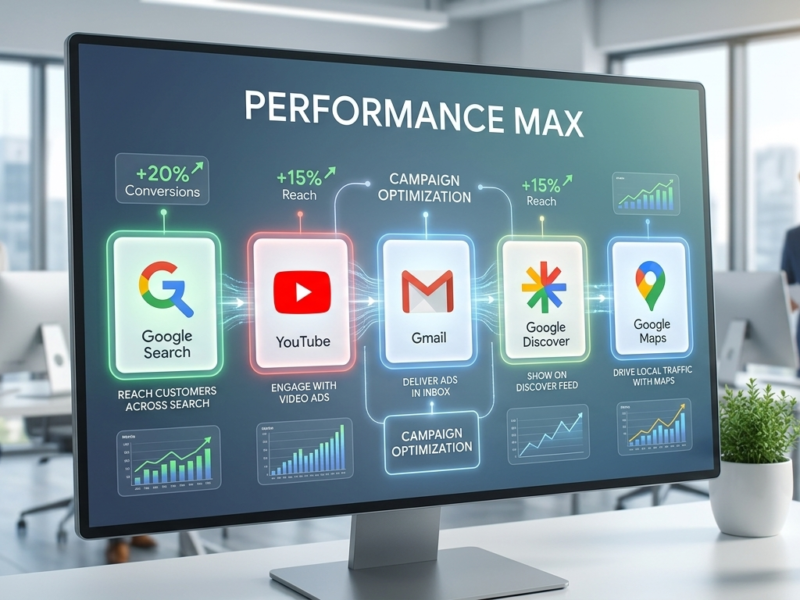
A Surprising Shift In Performance Max
What happened to Maps?
Performance Max campaigns have become one of the most frequently talked-about developments within Ad Grants over the past 2 years. Built within Google Ads, Performance Max (often shortened to PMax) is a goal-based campaign type that uses automation and machine learning to serve ads across the full range of Google inventory.
Instead of limiting advertisers to a single channel, PMax campaigns are designed to distribute ads across:
- Search
- Display
- YouTube
- Gmail
- Discover
- Maps,
all from one centralized campaign. The promise behind this format is simple: advertisers provide creative assets, conversion goals, and audience signals, and Google’s systems optimize delivery in real time to maximize performance.
To learn more, check out our webinar video for further insights. Watch below!
Automation Meets Scale
For many advertisers, this shift toward automation has represented a major evolution in how campaigns are structured and managed.
Instead of:
- Managing separate campaigns per channel
You now get:
- One centralized campaign
- Continuous machine learning optimization
- Scaled reach with less manual work
This makes PMax especially attractive for organizations looking to grow efficiently.
Google Ad Grants vs. Commercial Google Ads
Within the nonprofit advertising ecosystem, however, campaign capabilities have historically been more limited. Accounts running under Google Ad Grants have traditionally had fewer channel options compared to commercial Google Ads accounts. While commercial advertisers can access the full range of Google’s inventory, including YouTube, Display, Discover, Gmail, Search, and Maps, Ad Grants accounts have primarily been restricted to Search and Maps placements.
The Expectation
This distinction has always been important for nonprofit marketers to understand. While the Ad Grants program provides valuable free search advertising credit to eligible organizations, it does not mirror the full flexibility of paid Google Ads accounts. As a result, many nonprofits have focused heavily on search intent strategies, capturing users actively looking for services, donations, or information, rather than broader awareness-based placements across Google’s ecosystem.
Against this backdrop, the introduction of Performance Max generated significant interest among nonprofits and Google Ad Grants Certified Professionals community. Because PMax is designed to expand reach across multiple Google channels, many in the nonprofit advertising community began to anticipate that Ad Grants accounts might finally gain broader access to surfaces like YouTube, or Display. The expectation was not just stability, but expansion, an opportunity for nonprofits to benefit from the same automated cross-channel optimization that commercial advertisers were already using.
The Reality
However, a recent development has shifted that expectation. Us, as well as a number of other Google Ad Grants Professionals, were noticing that Performance Max campaigns in Ad Grants accounts were no longer serving on Maps placements. This change was unexpected, particularly because PMax is built around multi-channel distribution, and Maps had previously been considered one of the potential surfaces where ads could appear.
The surprise was not just in the technical change itself, but in what it implied. Instead of expanding channel access for Ad Grants advertisers, this behavior suggested a narrowing of placement options within an automated campaign type that is otherwise designed to broaden reach. For many nonprofit marketers, this felt counterintuitive. The general assumption had been that Google would gradually align Ad Grants capabilities more closely with commercial Google Ads functionality, especially in automated campaign formats like Performance Max.
What Actually Happened On February 3?
At this stage, there has been no clear public explanation from Google Ads that fully clarifies what happened to Maps placements in Performance Max campaigns within Google Ad Grants accounts. What sparked the concern was a consistent pattern. Multiple Google Ad Grants Professionals reported that Maps impressions appeared to stop entirely around February 3, despite no changes being made to campaign settings.
While some initially suggested this could be a reporting shift, potentially tied to updates like API changes or reclassification of network types, performance data told a different story. Several advertisers observed not just missing labels, but actual declines in traffic and metrics typically associated with Maps, such as directions or local engagement. This is, unfortunately, in line with our own observations.
Others, however, reported stable local action metrics or even conflicting signals, including occasional evidence of ads still appearing on Maps. Adding to the complexity, this behavior does not seem to impact commercial Google Ads accounts, where Performance Max campaigns continue to show Maps activity. As a result, the community remains divided, some believe this is a reporting issue, while others see it as a real loss of Maps placements specific to Ad Grants accounts.
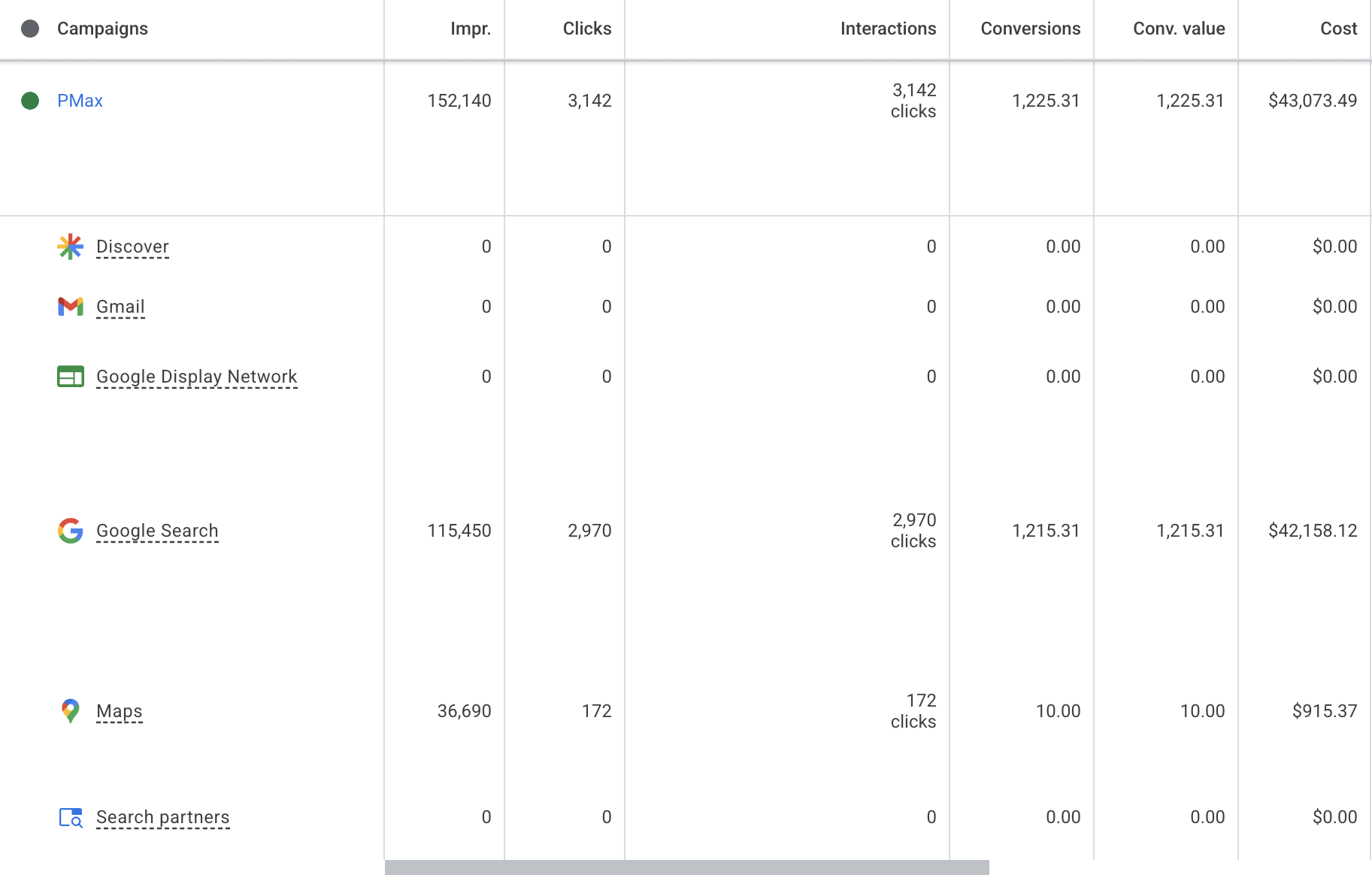
(Map placements – before February 3)
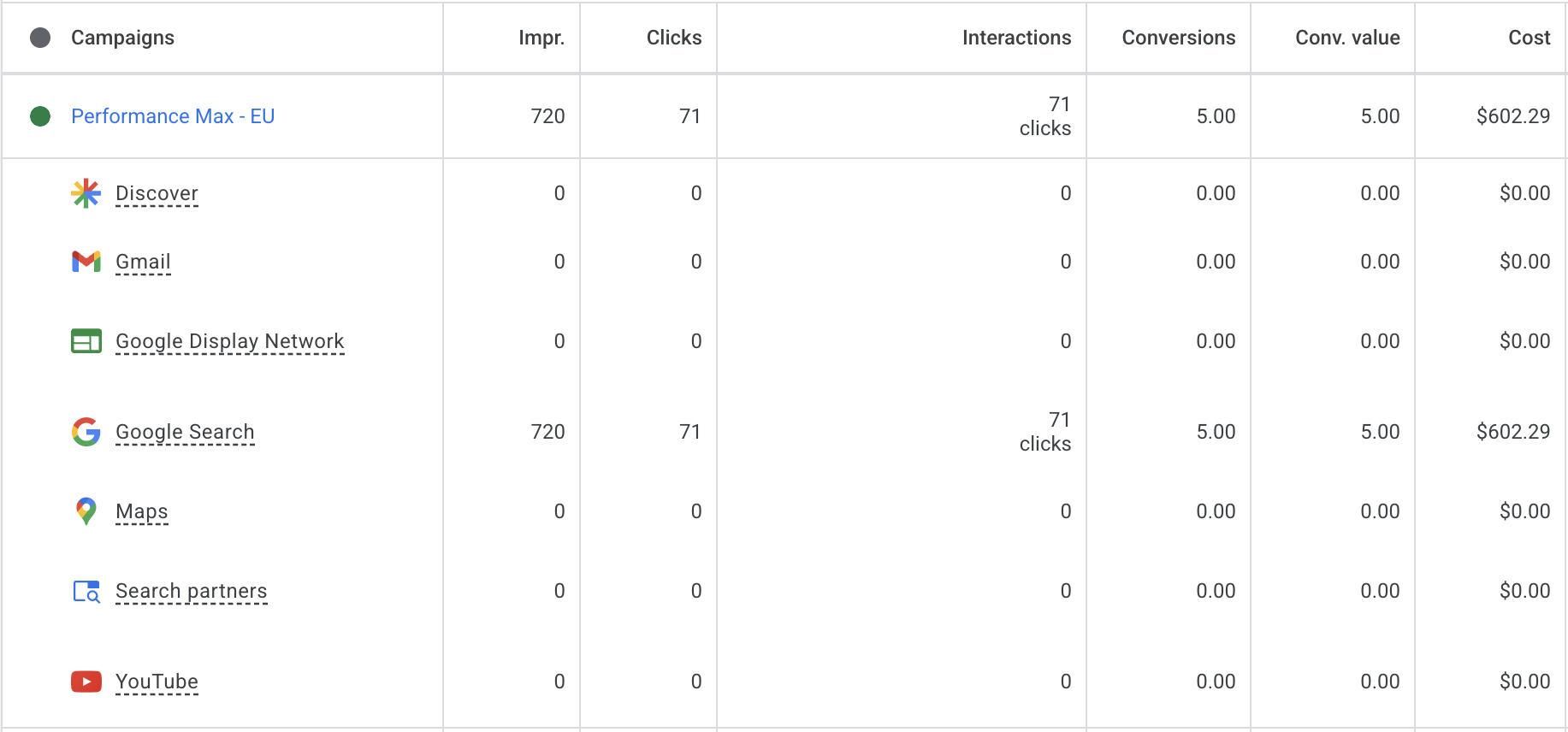
(Map placements – after February 3)
What Nonprofits Should Do Next
Regardless of the underlying reason, the practical impact for nonprofits is worth noting. Any reduction in channel exposure, especially in high-intent environments like Maps, can influence visibility for local services, nonprofit locations, and community-based outreach efforts. Organizations that previously saw incremental traffic or awareness from Maps placements may need to reassess performance and ensure their Search campaigns are fully optimized to compensate for potential losses.
At this point, we do not clearly know if this is just a reporting issue, a short-term or permanent change.
Ultimately, this development highlights an important reality of working within Ad Grants, the platform continues to evolve, but not always in ways the nonprofit community expects.
Some performance fluctuations can be attributed to campaign changes, some to the development in the ad auction, and some to systemic changes advertisers can’t influence (which is the case here). It is important to monitor the performance and to be creative at compensating for losses like this – by increasing bids, broadening targeting, testing new campaigns etc.
Final Thoughts
For nonprofit marketers, the key takeaway is to stay attentive to these shifts, document performance changes, and remain flexible in strategy. As this situation develops, if our team receives new information or official clarification, we will keep you updated so you can adapt your strategies accordingly.
In the meantime, if your organization needs support setting up or optimizing Performance Max campaigns within Google Ads or within Google Ad Grants, our team is happy to help ensure your campaigns are structured for strong performance and maximum impact. Contact us!
Back to previous pageAsk our free AI chatbot.
Blog
Useful Nonprofit Marketing Tips & Tricks
- Ad Grants
- Tips
How To Manage Your Google Ad Grants Account?
Six habits of a well-run grant account.
Read more



- Ad Grants
- News
A Nonprofit’s Guide To Measuring AI Visibility
Know where your organisation appears.
Read more
- Ad Grants
- News
The Ultimate Guide To Google Ad Grants 2026
Navigate Google Ad Grants with confidence.
Read more

Contact us directly or schedule a slot to talk to our expert team!
- AboveX Digital LLC
- 4023 Kennett Pike #50116, Wilmington, DE 19807 USA
- +1 (619) 330-9997
- Mon – Fri 9:00 am – 5:00 pm EST
- info@abovexdigital.com