No Impressions On Ad Grants Campaigns?
The ultimate Google Ad Grants guide.
Access to Google Ad Grants doesn’t automatically translate into impact, and that’s where many nonprofits get stuck. On paper, the program offers significant advertising potential, but in practice, some accounts never generate impressions at all. Campaigns exist, settings are active, but the ads simply don’t show. And more often than not, the issue isn’t demand, messaging, or even competition, it’s the account structure set up from day one.
Accounts are often built too narrowly from the start, with a limited number of keywords, restricted targeting, and setups that don’t give Google enough signals to serve ads. When impressions don’t come, the problem is rarely optimization, it’s foundation.
Running campaigns through Google requires a different mindset in this program. Google Ad Grants operates under unique constraints and opportunities that don’t align with standard Google Ads strategies. What works in paid accounts often underperforms, or completely fails here. That’s why structure isn’t just an organizational choice, it’s the foundation that determines whether your campaigns can scale, gather data, and ultimately succeed.
A well-built account doesn’t just look clean, it enables reach, supports automation, and gives Google the signals it needs to serve your ads. Without that foundation, even strong missions and well-written ads can remain invisible. Based on our extensive experience, and what actually works in practice, here’s how to approach account structure the right way.
Google Ad Grants Auction At Fault
A common misconception is that Ad Grants ads compete directly with paid advertisers in the same auction. In reality, Google separates the two. Google Ad Grants operates in its own auction, meaning Ad Grantees only compete against other Ad Grants accounts, not against commercial advertisers. Paid advertisers always take priority in the main Google Ads auction because they pay for placement with real currency.
This means Ad Grants ads are only shown in the remaining available ad space after paid ads have been served. If competition is high or relevance is low, there may simply not be enough eligible inventory for your ads to appear, which is often the reason for low or zero impressions.
This separation makes structure, relevance, and Quality Score even more important, because your visibility depends entirely on how well your account performs within the limited Ad Grants auction space.
Watch the video below for a deeper breakdown of how the Ad Grants auction works:
Campaign-level Structure
At the campaign level, segmentation should be thematic, but not overly restrictive.
Thematic segmentation
We recommend organizing campaigns around:
- Core programs or services
- Key audience intents (e.g., donate, volunteer, get help)
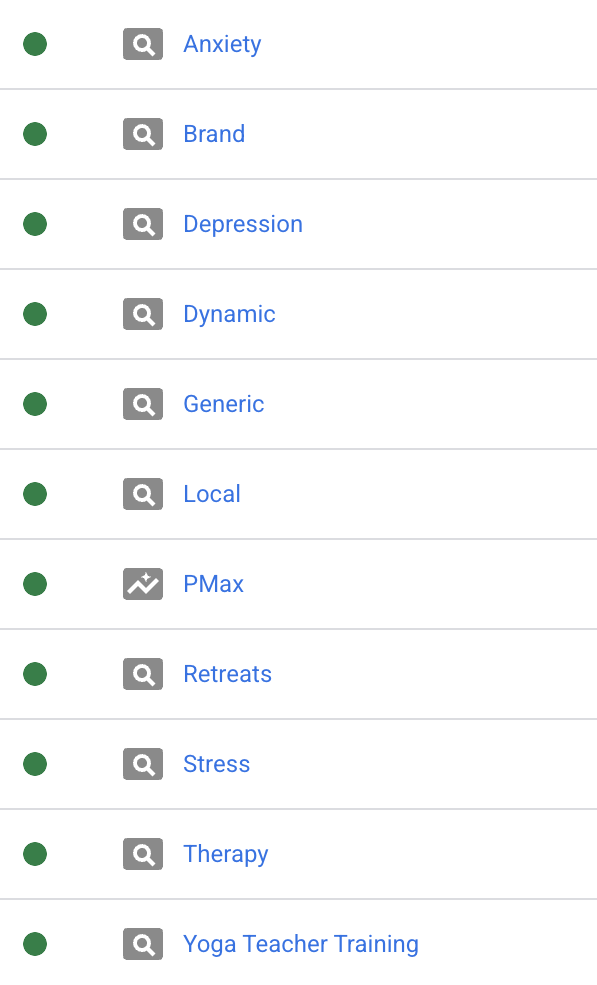
(Example of a comprehensive campaign structure)
This keeps messaging focused and easier to manage.
Include one “generic” campaign
In addition to segmented campaigns, it’s highly effective to include one broad, generic campaign that captures a wider range of searches. This campaign acts as a safety net, ensuring you don’t miss relevant traffic that doesn’t fit neatly into specific categories.
Keep geo-targeting wide (within reason)
A common mistake is narrowing geo-targeting too early. In Ad Grants accounts, this can severely limit reach and prevent campaigns from gaining traction.
Best practice:
- Target all areas where your nonprofit operates
- Avoid over-segmentation or hyper-local targeting at the start
- Expand reach first, then refine based on performance
If campaigns don’t generate enough data, they can’t optimize.
Ad Group-level Structure
This is where Ad Grants strategy diverges significantly from traditional paid advertising advice.
Instead of tightly controlled, minimal ad groups, we often recommend:
- Creating as many ad groups as necessary
- Including tens to hundreds of keywords per ad group
- Building large-scale keyword coverage across campaigns
The reasoning is simple, Ad Grants accounts need volume to gain traction. The goal isn’t minimalism, it’s discoverability. By covering a wide range of relevant, long-tail search queries aligned with your mission, you increase the chances of your ads being served and generating meaningful traffic.
At the same time, this approach doesn’t mean “set it and forget it.” Once your campaigns start collecting data, it’s important to evaluate which keywords are actually delivering value. Over time, you can begin refining your structure by removing keywords that consistently fail to generate impressions, clicks, or conversions. This balance, starting broad to increase reach, then gradually optimizing based on performance, is what allows Ad Grants accounts to scale effectively while maintaining relevance.
A Winning Keyword Strategy
Keyword selection is one of the most powerful levers in determining whether an Google Ad Grants account will remain limited or scale effectively. In many underperforming accounts, the issue isn’t a lack of mission relevance, it’s overly narrow keyword thinking that prevents campaigns from ever reaching enough search volume to learn and improve.
Use broad match keywords
Contrary to traditional Google Ads approaches, Ad Grants accounts perform best when they fully embrace broad match keywords as the default match type. Instead of trying to control every possible query variation, broad match allows Google systems to interpret user intent and match ads to a much wider range of relevant searches.
This is especially important in Ad Grants because it:
- Expands reach far beyond manually predicted keyword lists
- Captures natural language variations, synonyms, and related queries
- Helps uncover search demand that keyword research tools often miss
- Ensures campaigns generate enough volume to learn and optimize
Focus on long-tail, low-competition queries
Less competitive long-tail keywords are a core driver of success in Google Ad Grants accounts because they help nonprofits work with, rather than against, the structure of the Google Ads auction. Popular and high-volume terms are typically dominated by commercial advertisers with paid budgets, meaning Ad Grants ads are shown only in remaining inventory. By shifting focus to long-tail queries, nonprofits can avoid this direct competition and instead capture more specific search demand where visibility is more achievable. These keywords are also naturally aligned with program requirements, as they are more descriptive, intent-driven, and compliant with restrictions around overly generic or single-word terms.
Beyond compliance and competition, long-tail keywords consistently deliver stronger performance. They tend to produce higher click-through rates because they reflect clearer user intent, which is essential for maintaining the required 5% CTR threshold in Ad Grants accounts.
Their specificity also improves Quality Score by aligning closely with ad copy and landing pages, which helps ads remain eligible and competitive even within program constraints.
In addition, long-tail terms often represent users who are further along in their decision-making process, making them more likely to convert through actions such as donations, sign-ups, or service inquiries. This combination of lower competition and higher intent makes long-tail targeting one of the most reliable ways to scale both traffic and impact.
Create A Compelling Ad Copy
In Google Ad Grants campaigns, ad copy has a direct impact on CTR, Quality Score, and overall visibility in Google search results. Because competition for attention is high and Ad Grants policies are strict, ads need to be highly relevant, clear, and aligned with user intent.
Key best practices include:
- Include keywords in ad copy – Use target keywords in headlines and descriptions to improve relevance and alignment with search queries.
- Use dynamic headlines when appropriate – Dynamic Keyword Insertion ({Keyword: Default Text}) can personalize ads by reflecting the user’s search term.
- Strong and clear CTAs – Tell users exactly what to do next, such as Donate Today, Sign Up To Volunteer, or Download Our Guide.
- Highlight impact and uniqueness – Identify the unique aspects of your organization and focus on the results of your activities, including statistics or specific impact data where possible.
- Use ad extensions (required and performance-boosting) – At minimum, include two sitelink extensions per campaign. Add callouts, structured snippets, and call extensions to improve visibility and CTR (often by 10–15%).
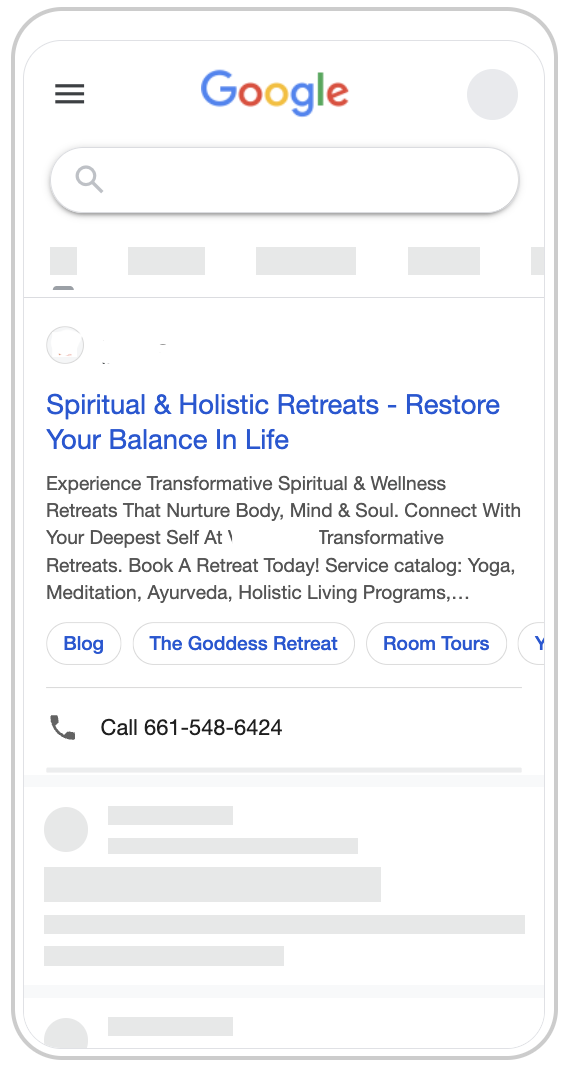
(Example of a well-performing ad copy)
Landing Pages That Engage
No account structure in Google Ad Grants can perform well without strong landing pages. Even the best keyword strategy and ad copy will struggle if users land on pages that are generic, slow, or disconnected from what they were searching for.
Ensure that:
- Each ad directs users to the most relevant page
- Messaging aligns from keyword → ad → landing page
- Pages are fast, mobile-friendly, and content-rich
This alignment improves both user experience and performance metrics.
Don’t Forget Dynamic & Performance Max Campaigns
Modern Ad Grants accounts should go beyond standard search campaigns.
Make sure you include:
- Dynamic Search Ads (DSA): help capture relevant searches you may not have explicitly added as keywords, making them especially useful for expanding coverage and identifying new search intent patterns.
- Performance Max campaigns: provides value by using automation to find additional relevant queries based on your website content, historical performance, and audience signals. This helps uncover incremental traffic opportunities that traditional keyword structures may miss.
Together, these campaign types act as a safety net for keyword-based structures.
Common Mistakes To Avoid
Even well-intentioned accounts can struggle due to a few recurring issues:
- Overly restrictive geo-targeting that limits reach
- Using phrase or exact match instead of broad match
- Choosing highly competitive, generic keywords
- Sending all traffic to your homepage
- Failing to expand keyword coverage over time
- Treating the account as static instead of evolving
Avoiding these pitfalls can dramatically improve performance.
When The Account Isn’t The Problem
Over the past few months, we’ve been seeing a different pattern, one that has nothing to do with structure. Nonprofits reach out telling us the same thing, no matter what they do, the campaigns just won’t pick up.
We start where we always start, with a full account audit. Usually that surfaces something, narrow keyword coverage, restrictive targeting, or a compliance issue waiting to happen. In some of these cases it didn’t. The campaigns were built correctly, nothing was breaching Ad Grants policy, and there was no warning or red bar anywhere in the account.
So we moved forward as we would with any new client. We ran our onboarding process, built new campaigns, and worked to bring the existing ones back to performance. Weeks passed with continuous optimization, and nothing happened. Grant utilization sat at $0 and never moved.
When we escalated it to our contact at Google Support, the picture finally made sense. These accounts were on some sort of hold. Suspended at some point in the past, even though no notification, email, or red bar appeared in the interface. From the inside, everything looked completely normal. Google Support told us they’re aware of it and sorting it out, but they’re not yet certain why it’s happening in some accounts and not others.
Signs your account may be affected
- Campaigns are approved and running, but impressions stay at or near zero
- Grant utilization sits at $0 and doesn’t rise
- An audit turns up no structural or compliance explanation
- Weeks of optimization change nothing
- The account was inactive for a while before you launched new campaigns
That last point matters most. We’ve seen this almost exclusively in accounts that sat unused for months and were then brought back with fresh campaigns.
What you can do about it
There is no fix you can apply from inside the account, the hold has to be lifted on Google’s side. To get there, you need to reach the support team that handles Ad Grants specifically. General Google Ads support won’t get you anywhere, Ad Grants runs as a separate program with its own rules, and the standard support queue isn’t equipped to identify or resolve this. An Ad Grants certified professional knows how to reach the right team and what to ask for, which is usually the difference between an account that stays dark and one that finally starts spending. Experiencing something similar? Contact us!
Final Thoughts
Ask our free AI chatbot.
Blog
Useful Nonprofit Marketing Tips & Tricks
- Ad Grants
- Tips
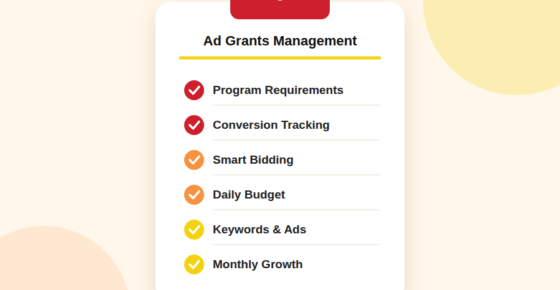
How To Manage Your Google Ad Grants Account?
Six habits of a well-run grant account.
Read more



- Ad Grants
- News
A Nonprofit’s Guide To Measuring AI Visibility
Know where your organisation appears.
Read more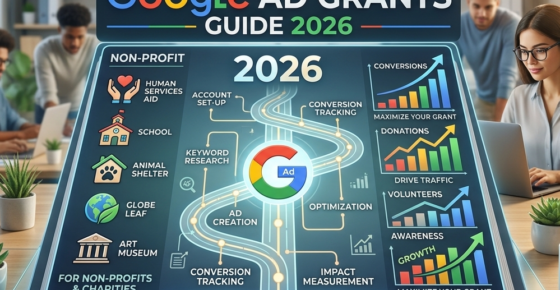
- Ad Grants
- News
The Ultimate Guide To Google Ad Grants 2026
Navigate Google Ad Grants with confidence.
Read more

Contact us directly or schedule a slot to talk to our expert team!
- AboveX Digital LLC
- 4023 Kennett Pike #50116, Wilmington, DE 19807 USA
- +1 (619) 330-9997
- Mon – Fri 9:00 am – 5:00 pm EST
- info@abovexdigital.com